Research Topics

Fundamental Material Science Title
High-spatial-resolution setup for transmission, reflection, and (angle-resolved) photoluminescence measurements, including an Ocean Optics visible/UV lamp and miniature spectrometer, Power-Technologies violet and blue diode lasers, piezo-controlled translational and rotational stages, and various high-numerical-aperture microscope objectives.
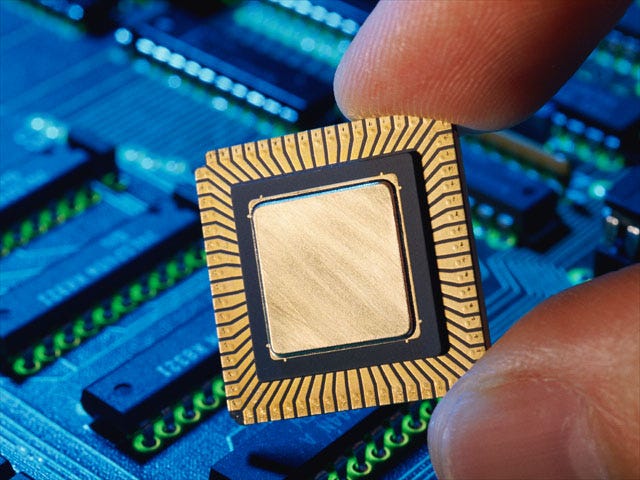
Fundamental Material Science Title2
High-spatial-resolution setup for transmission, reflection, and (angle-resolved) photoluminescence measurements, including an Ocean Optics visible/UV lamp and miniature spectrometer, Power-Technologies violet and blue diode lasers, piezo-controlled translational and rotational stages, and various high-numerical-aperture microscope objectives.

OPTICAL MEASUREMENT SETUPS
High-spatial-resolution setup for transmission, reflection, and (angle-resolved) photoluminescence measurements, including an Ocean Optics visible/UV lamp and miniature spectrometer, Power-Technologies violet and blue diode lasers, piezo-controlled translational and rotational stages, and various high-numerical-aperture microscope objectives.
Lastest News
-
Dr. Matsubara will give an invited talk at SPIE In San Diego.
Dr. Matsubara will the invite talk entitled: First-principles calculations of strain effect and vacancies/impurities related to the Shockley-Read-Hall process in MWIR and LWIR HgCdTe alloys
Abstract - Mercury cadmium telluride (HgCdTe) has long been the material of choice for infrared (IR) detectors. It covers a very wide IR spectral range, including the mid-wavelength IR (MWIR: 3-5 μm) and long-wavelength IR (LWIR: 8-14 μm) regions. The performance of these detectors is degraded by residual strain introduced during the growth process. We will discuss the effects of strain on the band gap energies and band structures of MWIR and LWIR HgCdTe alloys. In addition, the carrier generation-recombination process significantly impacts the performance of the devices. In particular, Shockley-Read-Hall (SRH) recombination plays a crucial role in determining carrier lifetimes in low carrier concentration HgCdTe. We will explore plausible defect/impurity states within the band gap of MWIR and LWIR HgCdTe alloys responsible for the SRH process. Moreover, we will evaluate their non-radiative carrier capture process through first-principles calculations.
-
Dr. Bellotti will give the keynote presentation at SPIE Optics and Photonics In San Diego.
Dr. Bellotti will give the keynote presentation at SPIE Optics and Photonics In San Diego entitled: Numerical modelling of infrared detectors: state of the art and open problems
Abstract - Numerical simulation methodologies have proven to be critical for the design of IR detector arrays, understand detector operation and elucidate physical phenomena, and lead to significant improvement of device performance. Some methodologies are computationally demanding and they need to be judiciously used for the process of device optimization. This talk will present the state-of-the-art in numerical design approaches for photovoltaic and superlattice based detectors, avalanche photodiodes and novel quantum structures. The limitations of each approach will be presented and possible improvement strategies outlined. Finally, the use of unique combinations of machine learning techniques and conventional modelling approaches will be presented.
-
Material and Device Simulation (CSM) annual meeting
The Center for Semiconductor Material and Device Simulation (CSM) annual meeting will take place at ARL ALC on May 21st, 2025.
-
Congratulation to Bo-Shiang!
Bo-Shiang Yang sucessfully defended his master thesis entitled: Study of the temeperature dependent electron mobility in GaN/ScAlN heterostructure.
-
Alireza Aghanejad Ahmadchally will give a talk at SPIE in San Diego on InAs/GaSb/AlSb SLS.
Alireza Aghanejad Ahmadchally will give a talk at SPIE in San Diego entitled: Performance analysis of W, N and M-Structures for T2SL Detectors.
Abstract - Type-II superlattices (T2SLs) are promising for infrared photodetection due to their tunable band gaps and potentially reduced Auger recombination. In this work, we investigate three device configurations based on the M, N, and W structures that integrate an AlSb barrier within GaSb/InAs T2SL periods to enhance electron–hole overlap for increased absorption. We carry out k·p simulations encompassing 400 GaSb/InAs thickness combinations each with six AlSb layer thicknesses (1–6 monolayers). From each set of 400 simulations, a single mid-wave high-performance structure is identified using a figure of merit derived from the computed band parameters. This results in six selected T2SLs for M, N, and W configurations that exhibit optimum performance. Subsequently, we employ a quantum transport approach, the non-equilibrium Green’s function (NEGF), to evaluate the transport properties of these selected designs under varying device lengths and temperatures. Comparisons with standard T2SL photodetectors will clarify the performance gains afforded by these barrier-enhanced configurations.
-
Dr. Matsubara will give an invited talk at SPIE In San Diego.
Dr. Matsubara will the invite talk entitled: First-principles calculations of strain effect and vacancies/impurities related to the Shockley-Read-Hall process in MWIR and LWIR HgCdTe alloys
Abstract - Mercury cadmium telluride (HgCdTe) has long been the material of choice for infrared (IR) detectors. It covers a very wide IR spectral range, including the mid-wavelength IR (MWIR: 3-5 μm) and long-wavelength IR (LWIR: 8-14 μm) regions. The performance of these detectors is degraded by residual strain introduced during the growth process. We will discuss the effects of strain on the band gap energies and band structures of MWIR and LWIR HgCdTe alloys. In addition, the carrier generation-recombination process significantly impacts the performance of the devices. In particular, Shockley-Read-Hall (SRH) recombination plays a crucial role in determining carrier lifetimes in low carrier concentration HgCdTe. We will explore plausible defect/impurity states within the band gap of MWIR and LWIR HgCdTe alloys responsible for the SRH process. Moreover, we will evaluate their non-radiative carrier capture process through first-principles calculations.
-
Dr. Bellotti will give the keynote presentation at SPIE Optics and Photonics In San Diego.
Dr. Bellotti will give the keynote presentation at SPIE Optics and Photonics In San Diego entitled: Numerical modelling of infrared detectors: state of the art and open problems
Abstract - Numerical simulation methodologies have proven to be critical for the design of IR detector arrays, understand detector operation and elucidate physical phenomena, and lead to significant improvement of device performance. Some methodologies are computationally demanding and they need to be judiciously used for the process of device optimization. This talk will present the state-of-the-art in numerical design approaches for photovoltaic and superlattice based detectors, avalanche photodiodes and novel quantum structures. The limitations of each approach will be presented and possible improvement strategies outlined. Finally, the use of unique combinations of machine learning techniques and conventional modelling approaches will be presented.
-
Material and Device Simulation (CSM) annual meeting
The Center for Semiconductor Material and Device Simulation (CSM) annual meeting will take place at ARL ALC on May 21st, 2025.
-
Congratulation to Bo-Shiang!
Bo-Shiang Yang sucessfully defended his master thesis entitled: Study of the temeperature dependent electron mobility in GaN/ScAlN heterostructure.
-
Alireza Aghanejad Ahmadchally will give a talk at SPIE in San Diego on InAs/GaSb/AlSb SLS.
Alireza Aghanejad Ahmadchally will give a talk at SPIE in San Diego entitled: Performance analysis of W, N and M-Structures for T2SL Detectors.
Abstract - Type-II superlattices (T2SLs) are promising for infrared photodetection due to their tunable band gaps and potentially reduced Auger recombination. In this work, we investigate three device configurations based on the M, N, and W structures that integrate an AlSb barrier within GaSb/InAs T2SL periods to enhance electron–hole overlap for increased absorption. We carry out k·p simulations encompassing 400 GaSb/InAs thickness combinations each with six AlSb layer thicknesses (1–6 monolayers). From each set of 400 simulations, a single mid-wave high-performance structure is identified using a figure of merit derived from the computed band parameters. This results in six selected T2SLs for M, N, and W configurations that exhibit optimum performance. Subsequently, we employ a quantum transport approach, the non-equilibrium Green’s function (NEGF), to evaluate the transport properties of these selected designs under varying device lengths and temperatures. Comparisons with standard T2SL photodetectors will clarify the performance gains afforded by these barrier-enhanced configurations.